
 CO., Ltd. distributes
 CO., Ltd. distributes
A Common Standards Sought in Periodontal Disease Treatment Settings
If we could show patients objective reasons for extraction, we would need clear extraction criteria.
We have been treating periodontal disease with the goal of preserving the teeth, but when periodontitis becomes severe, we need to recommend extraction to the patient with a clear and reasonable explanation.
I want numerical indicators for the progression of periodontal disease…
It would be ideal if there were a “measure” showing the progression of periodontitis that both doctors and patients could share, allowing treatment to proceed in a way that satisfies both parties.
In the field of medical collaboration…
I’ve been asked by another department to provide a diagnosis of periodontal disease, but I’m not sure what to write in response.
Informed consent
I have limited clinical experience and am not a periodontist. However, I want to ensure informed consent with patients regarding periodontal treatment.
New Periodontal Disease Indicator Values
What is the PerioPerio Periodontal Disease Assessment App?
PerioPerio is an app that evaluates the progression of periodontitis (a disease where periodontal disease affects the periodontal ligament and alveolar bone).
PerioPerio focuses on “occlusal force” and “periodontal ligament area”—factors often overlooked in previous evaluations—to quantify and visualize the progression of periodontitis from a new perspective.
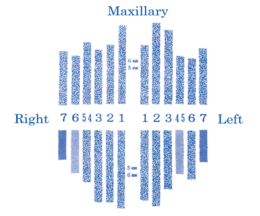
The structure of teeth and jaws varies not only between races due to evolutionary processes and dietary habits, but also within the same individual depending on the type of tooth.
Furthermore, periodontitis is a complex disease influenced not only by infectious disease but also by “biting force.”
PerioPerio enables a more accurate and practical assessment of periodontitis by incorporating these anatomical and mechanical factors.
What can you learn from PerioPerio?

values indicate
the scale of
tooth extraction
due to the
progression of
periodontitis

periodontitis progression
for each tooth
and the entire oral
cavity is
displayed
in four colors

three evaluation values
is displayed in an
easy-to-understand
four-color bar graph

there are
numerical values
of progression
levels displayed
and classified
by tooth type

periodontitis
is quantified
into 100 levels
PerioPerio is an app that quantifies and visualizes the progression of periodontitis from a new perspective by focusing on “occlusal force” and “periodontal ligament area”—factors often overlooked in conventional assessments.
The structure of teeth and jaws varies between races due to evolutionary processes and dietary habits, resulting in distinct characteristics of periodontal tissues.
Furthermore, periodontitis is a complex disease influenced not only by bacterial infection but also by the force exerted during chewing.
PerioPerio enables more accurate and practical periodontal disease assessment by incorporating these mechanical factors.
Do you have this concern?
“Should this tooth be preserved… or extracted…?”
Have you ever faced this dilemma with a tooth suffering from advanced periodontal disease?
The current classification of periodontitis only includes three stages: mild, moderate, and severe. Particularly when deciding whether to treat or extract a tooth diagnosed as “severe,” clear guidelines are often lacking.
Difficult decisions… The reasons and voices from the field
- The moment I told the patient, “We tried treatment multiple times, but ultimately extraction was necessary…” they walked away.
- There are many cases where it is difficult to decide whether to continue treatment or move on to an implant.
- With numerous examination items and limited time, explaining the situation to patients can be challenging.
All of these issues stem from the lack of objective indicators to show the progression and prognosis of periodontitis.
PerioPerio solves that problem.
What does PerioPerio make possible?
With just one input of the deepest CAL and PD value, it displays the degree of periodontal disease progression (extent of periodontal tissue destruction) for each tooth (on a scale of 0 to 100) and a prognosis evaluation (prediction of future progression).
It allows dentists to move beyond traditional diagnoses based on “intuition and experience” and provide treatment that can be explained objectively.
PerioPerio maintains clinical consistency with the periodontitis classification widely used in Japan.
Comparing PerioPerio scores across periodontitis classifications revealed statistically significant differences (P<0.01) in all classifications.
Therefore, PerioPerio maintains clinical consistency with periodontitis classifications* widely used in Japan.
Furthermore, it has been confirmed that PerioPerio enables more detailed clinical evaluation by providing distinct classification values for different tooth types.
*Japanese Periodontal Disease Diagnosis and Treatment Guidelines, JADS
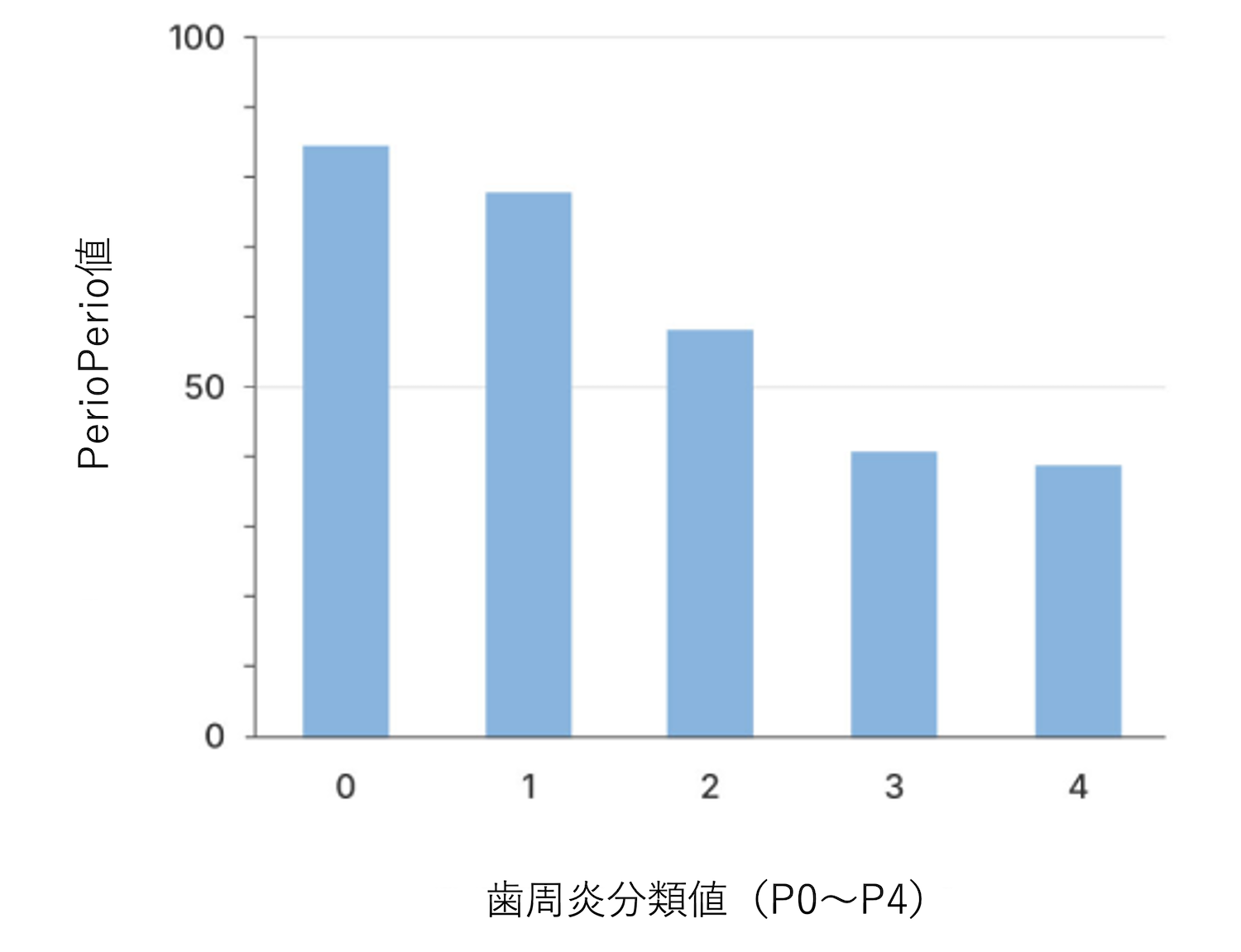
Source: “A Study to Examine the Clinical Validity of the Prototype Periodontal Disease Indicator Software—PerioPerio” Japanese Society of Clinical Periodontology Clinical Research Results Report. 2021
PIOX developed this app with the goal of “clearly showing the progression of periodontitis for each tooth type.”
Since the era when periodontal disease was called pyorrhea, we have consistently focused on improving periodontal treatment methods from the standpoint that “natural teeth can be preserved through periodontal treatment.” We have repeatedly presented at academic conferences and published papers on methods for evaluating periodontal disease.
In 2016, following a five-year clinical study under the ethical review of the Japanese Society of Clinical Periodontology, we developed the periodontal disease progression assessment app “PerioPerio” as the culmination of this research. We began offering it for use in dental practices.
About Us
Representative Profile
The Effects of Periodontal Disease on Various Systemic IllnessPediodentitis
Toxic substances released by periodontal disease bacteria enter the bloodstream through the gums and circulate throughout the body, contributing to the worsening of various diseases. Inflammatory substances impair the function of insulin, which lowers blood sugar levels (diabetes), and are involved in preterm birth, low birth weight, obesity, and arterial hardening (myocardial infarction, cerebral infarction). Furthermore, periodontal bacteria can be aspirated into the bronchi and lungs, causing aspiration pneumonia, a leading cause of death among the elderly. The proteolytic enzyme gingipain, produced by the periodontal bacterium P.g. (Porphyromonas gingivalis), has been suggested to worsen Alzheimer’s disease.
Preventing and treating periodontal disease reduces the risk of various systemic illness.
Periodontal disease worsens type 2 diabetes
A positive correlation was observed between the severity of periodontal disease and the onset of type 2 diabetes, indicating that periodontal disease is a predictor for type 2 diabetes onset. Individuals with moderate to severe periodontal disease have a significantly higher risk of developing diabetes compared to healthy individuals.
Reference: Periodontal disease and incident type 2 diabetes: results from the First National Health and Nutrition Examination Survey and its epidemiologic follow-up study. Demmer et al., 2008
Periodontal Disease and Coronary Heart Disease
C-reactive protein (CRP) levels, an indicator of systemic inflammation that rises in response to periodontal inflammation, are used as a predictor of coronary artery disease.
Reference: C-reactive protein and other circulating markers of inflammation in the prediction of coronary heart disease. Danesh et al., 2004
Periodontal Disease and Endothelial Dysfunction
Intensive periodontal treatment induced acute, short-term systemic inflammation and endothelial dysfunction (impaired physiological functions such as immune responses, hemostasis, and vascular tone regulation performed by endothelial cells lining the inner surface of blood vessels). However, six months after treatment, improvement in the oral environment was associated with improved endothelial function.
Reference: Treatment of periodontitis and endothelial function. Tonetti et al., 2007
Periodontal Disease and Coronary Artery Disease
Elevated systemic C-reactive protein levels associated with periodontitis may increase the risk of coronary artery disease.
Reference: Periodontitis-associated up-regulation of systemic inflammatory mediator level may increase the risk of coronary heart disease. Nakajima et al., 2010
See More
The academic papers on which this application is basedClick to expand the details
“Differences in Root Length by Race and Tooth Type”
The length of the tooth roots differs between Asian and European individuals.
The root length of Asians, including Japanese individuals, is shorter, and depending on the tooth type, the difference can reach up to 2mm.
Taking this difference into account, PerioPerio has incorporated criteria for evaluating the optimal stage of periodontal disease progression for Asians. This enables more accurate diagnosis of periodontal disease progression and prognosis.
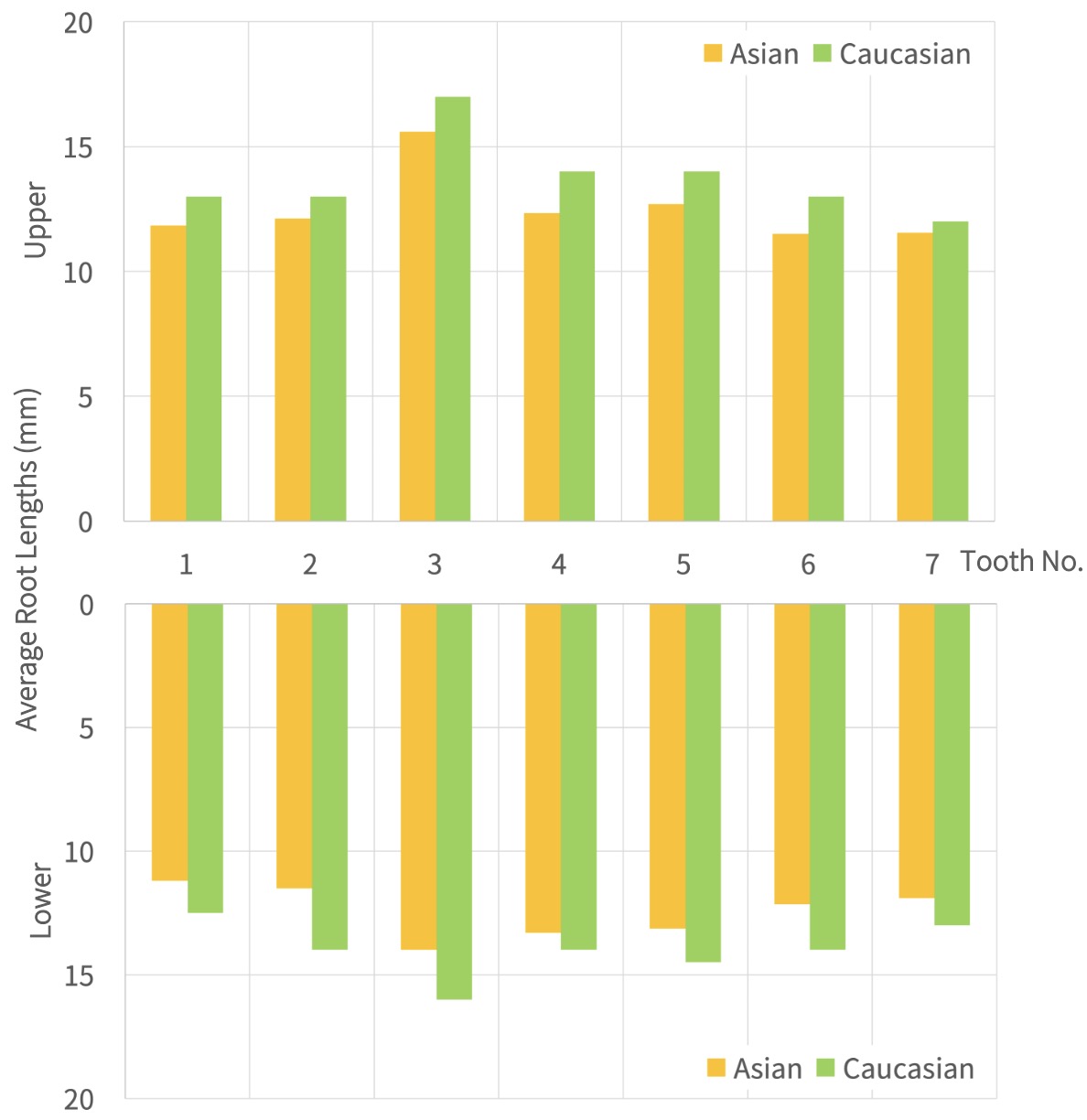
REF:Nelson et al., 2010, Kamijyou et al., 1979
“Differences in Classification Values Between Periodontitis Classification and New Periodontitis Classification”
Differences were observed between the classification values of the Periodontal Disease Classification (Japanese Dental Association, 2007) and the New Periodontal Disease Classification (AAP/EFP, 2018).
This discrepancy has been reported to stem from differences in root length between Western individuals and Japanese individuals.
PerioPerio resolves this discrepancy by incorporating the “root length difference” specific to each race and tooth type as a parameter, enabling more accurate and practical periodontitis assessment tailored for Asians.The stages and grades of the new periodontal disease classification differ depending on the type of tooth.
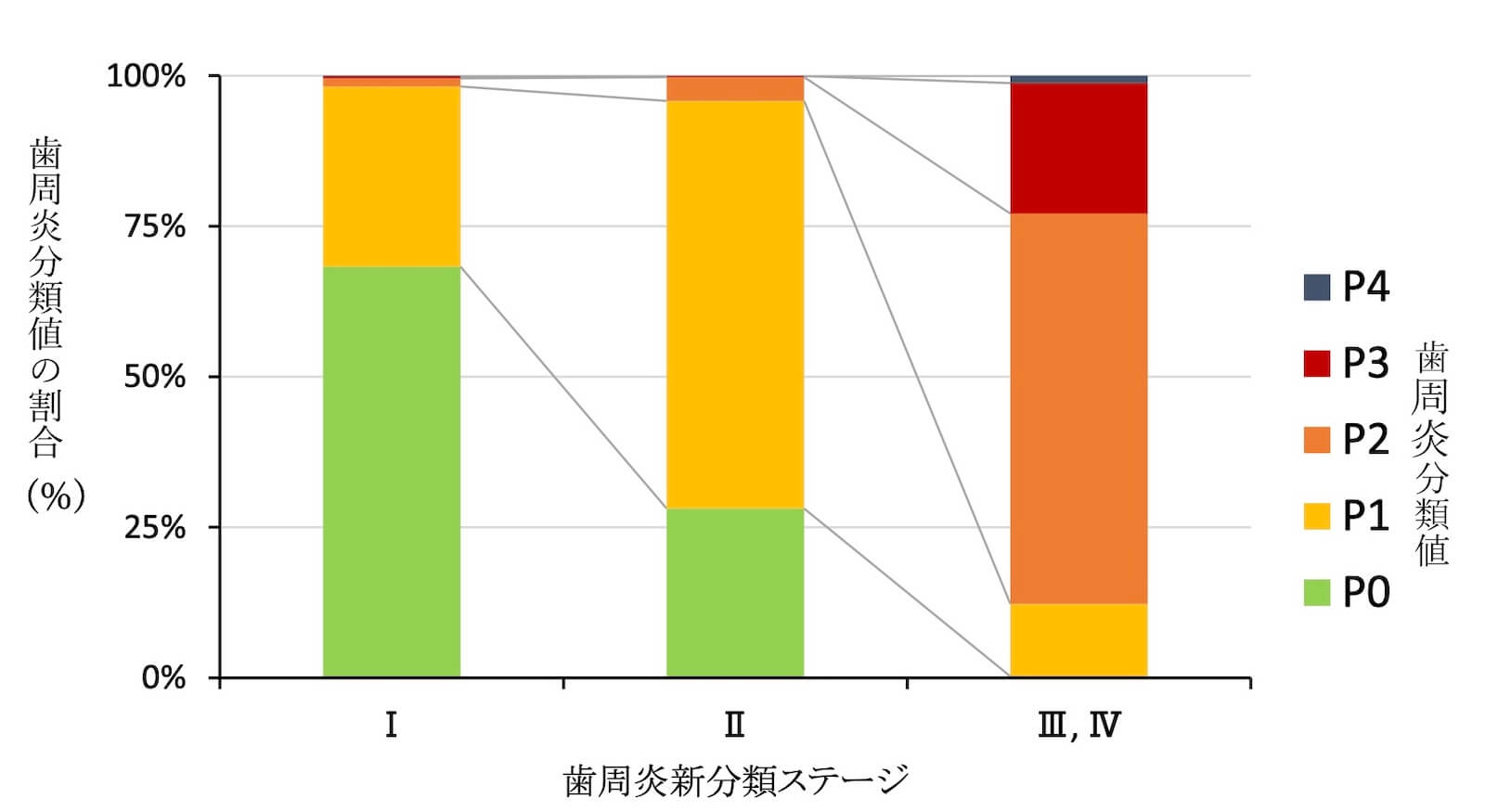
“The stages and grades of the new periodontitis classification differ depending on the type of tooth”
The stages and grades of the new periodontal disease classification (AAP/EFP 2018) differ by tooth type. Therefore, progression assessment must account for the varying severity of periodontal disease across tooth types, even when CAL values are identical.
The length of the tooth roots differs between Asian and European individuals.
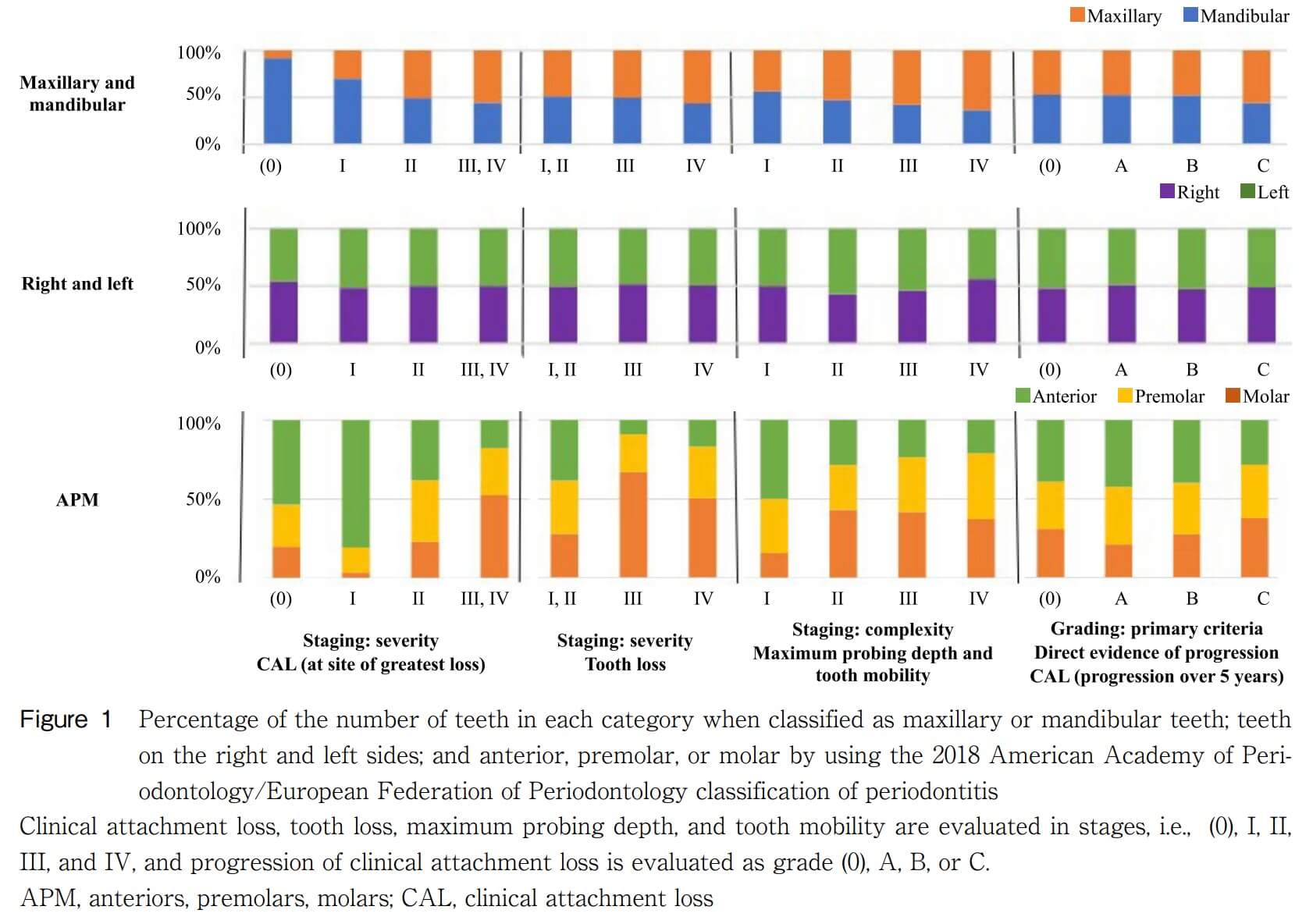
“The CAL value at the time of tooth loss due to periodontitis varies by tooth type”
Data from clinical research revealed that the CAL value at the time of tooth loss due to periodontitis varies by tooth type, and that the CAL value at the time of loss correlates with the tooth type.
In other words, it has been determined that an individual assessment of periodontal disease progression is necessary for each tooth type.
Features of PerioPerio








Recommended for dentists and dental care staff
- Doctors struggling with decisions on managing severe periodontitis
- Doctors seeking clear criteria for deciding between continued treatment or extraction
- Doctors wishing to share treatment plans with patients
PerioPerio is classified as a non-medical device by the PMDA (Japan, Taiwan, Hong Kong, India, Vietnam).
PerioPerio holds patents in Japan, the United States, the United Kingdom, the EU, China, India, South Korea, Taiwan, Hong Kong, Indonesia, the Philippines, and Vietnam.
PerioPerioは、登録患者数に応じた月額課金制です。
ご契約人数に応じて、1人あたりの費用が下がります。
500人以上のフィールドワーク歯周病検診には汎用のパソコンのみでデータ保存・処理が可能です。
1件当たりの利用料も安価となります。詳細はお問い合わせください
TestimonialsReviews
 Dentist
One question I’d always wondered about while practicing dentistry was:
Why are there more dentures for molars than for front teeth?
I had arbitrarily interpreted it as being because molars are harder to brush than front teeth, or because molars have root bifurcations. However, PerioPerio clearly shows that periodontal disease classification values differ between front teeth and molars, quantifying them by tooth type. It feels like a long-standing question has finally been answered.
 Dentist
The novelty lies in focusing on occlusal function and calculating values based on secondary occlusal trauma and the anatomy of each tooth. It’s helpful that it can be quantified in multiple stages.
DentistRecently, AI adoption has advanced in the dental field, leading to the emergence of simplistic applications. PerioPerio has reportedly passed the national regulatory review under the Pharmaceutical and Medical Devices Act and been classified as a non-medical device. It can be used with confidence.
 Dental Hygienist
Periodontal disease treatment is a long-term process. Using cloud services for data input and output means examination data appears instantly, eliminating the need for organizing test data or maintaining paper inventory, making it very convenient to use.
 Dental Hygienist
It’s incredibly simple. You just use one pocket probe to take a single measurement at the deepest point of the tooth. This means patients don’t have to keep their mouths open for long periods, and they don’t need repeated X-ray exposure. When there are many items to check, even experienced dental hygienists take time, and analysis takes even longer. As a new hygienist like me, I’m thrilled that I can get the same results in the same time as my senior colleagues. Plus, patients seem more satisfied, and treatment progresses smoothly.
Frequently Asked QuestionsFAQ
Traditional periodontitis classification uses three stages: mild, moderate, and advanced. However, PerioPerio classifies it on a scale from 0 to 100. What does this mean?
Conversely, if an examination takes a significant amount of time and causes considerable discomfort, and the result is “advanced,” would the patient understand and accept this if it were communicated to them? I believe that diagnosis is meaningless unless both the practitioner and the patient understand it and it leads to the next treatment step.
PerioPerio provides accurate periodontal disease indicators, presenting values ranging from 0 to 100 that vary by tooth type. Even if the condition is severe, it clearly shows numerically whether the tooth is at the stage where extraction is unavoidable or if it can be preserved through treatment.
In clinical practice, extractions and implants of posterior teeth (molars) are common. Does this mean the diagnosis was incorrect?
In our clinical research, periodontal disease progresses faster in molars than in anterior teeth (Source paper: “Relationship between the New Periodontal Disease Classification Based on CAL (AAP/EFP 2018) and the Periodontal Disease Classification (Japanese Dental Association 2007)”).
When examining both anterior teeth and molars using the same criteria as previous classifications, molars tend to require extraction ahead. It is necessary to examine each tooth type using different criteria.
The current periodontal disease examination we perform uses multiple criteria, such as X-rays and pocket measurements. In contrast, PerioPerio evaluates based solely on the “deepest CAL value.” Is that really sufficient?
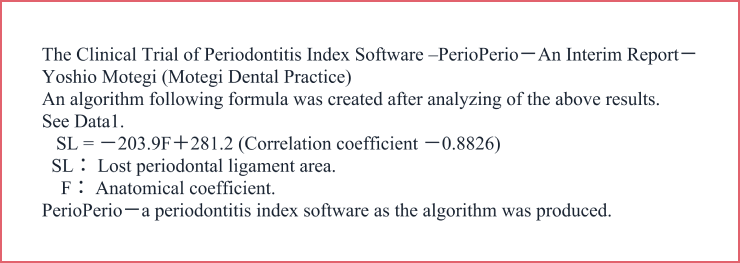
The PerioPerio value is an indicator calculated using the clinical research algorithm SL = -203.9F + 281.2, as presented in the academic paper “PerioPerio: An Academic Paper.” This indicator value has been statistically proven over a five-year clinical study to accurately reflect periodontitis classification (Japanese Dental Association, 2007) without bias. You can use it with confidence.
Will the data I enter be visible to other users?
Our system is designed so that information entered by users cannot be viewed by other users, except in specified cases. Data entered using our cloud service (AWS) is secured, enabling permanent data input and output. Data can also be printed out.
Is there a trial version? Is there a one-time purchase option?
There are no trial or one-time purchase options. Registration is on a monthly fee basis. You can cancel anytime.
I forgot my password
Click “Forgot Password” on the login screen to display the password reset screen.
Enter the email address used during account registration and click the “Send Password Reset Instructions” button to receive a password reset guide email.
I operate multiple clinics. Can I use one account? Can multiple devices connect simultaneously?
Regardless of size, one account is available per clinic. Group clinics require one account per individual clinic. Multiple devices can connect simultaneously.
Can I cancel anytime? If I cancel, will I lose access to my existing data?
You may cancel at any time. Your data will no longer be accessible. However, you may print and save your medical records before canceling.
Can I print out results sheets to give to patients from the app? Do they include graphs showing the progression or improvement of periodontal disease?
This can be printed as a medical record. Graphs cannot be printed, so please use the terminal screen to view them together with the patient.
What devices can I use the app on? (Windows PC, iPhone, Android, tablet, etc.)
Compatible with PCs (Windows, Mac) and tablets (iPad).
ContactPlease feel free to contact us
For inquiries regarding our app or business, please fill out the form below and submit it. A representative will contact you shortly.